 | |
On that warm Spring day at 9th and Main, the streetcars rushed by the Diamond Building. In 1886, a lawyer watched from a distance as the editor of the Kansas City Times purchased a few papers from a street vendor at the Junction. As the editor jumped on the streetcar No. 2 heading eastbound with a half dozen other passengers, the lawyer on a mission followed him, gripping his Smith and Wesson in his jacket pocket.
|
 |
| The Junction in 1900. Image courtesy Missouri Valley Special Collections, KCPL |
“You have traduced my wife!” the shooter screamed as he fired his first shot.
* * * * * * * * * *
William Dorsey Carlile was born in 1851 in Virginia, the son of a prominent senator named John Snyder Carlile. His mother was said to have been a close relative of Stonewall Jackson- a fact that Carlile proudly told anyone who would listen.
Interestingly enough, William's own father, John, seemed to have a difficult upbringing that sounds quite familiar. John's family always insisted that his father, Jonathan, died when he was quite young- but this was not true. According to the Library of Virginia, William's grandfather Jonathan Carlile "was an abusive alcoholic who squandered his wife's inheritance and whose conduct forced the family to move frequently."
So, the apple doesn't fall far from the tree.
 |
| John Snyder Carlile (1817-1878) Courtesy Library of Congress |
In 1875, Carlile met his future wife, Mary Saville Foster at a wedding they both attended and married shortly thereafter in her hometown of Evanston, Ill. She was the daughter of a founder of Chicago and came from “good stock.” Carlile later insisted that he tried to back out of the wedding, stating he didn't love her, but her family allegedly convinced him to proceed.
What a lovely start to wedded bliss.
Due to poor health, Carlile often traveled to California and Colorado where the climate was touted for being pleasurable for those with sickness. On a trip through Kansas City in 1879, Carlile set his sights on relocating to the growing city.
What a lovely start to wedded bliss.
Due to poor health, Carlile often traveled to California and Colorado where the climate was touted for being pleasurable for those with sickness. On a trip through Kansas City in 1879, Carlile set his sights on relocating to the growing city.
Early accounts in his adoptive town show that he fit in quite well and made friends quickly. He ran for prosecutor of Jackson Co. in 1884 under the democratic ticket but was unsuccessful. He welcomed two children, Marjorie in 1882 and Alonzo in 1885. One other child died in infancy.
All was well until Carlile’s path ran across a young, beautiful woman named Sallie Crute.
 |
| A photograph of the East Bottoms in 1900 shows development of land. Photo taken from Scarritt Point Courtesy Missouri Valley Special Collections, KCPL |
As crowds of newcomers moved into Kansas City, land prices were on the rise. The East Bottoms was slowly growing with new businesses.
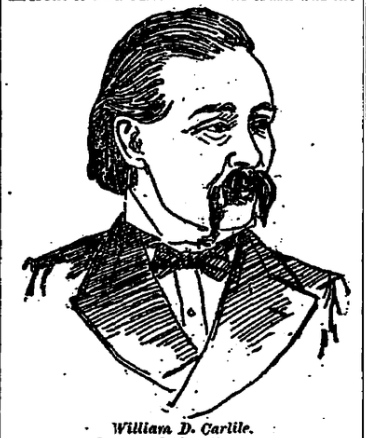 A wood hewer in the East Bottoms named William Crute left a widow and three children to split his 280 acres of prime real estate. His widow, Sarah remarried and found herself in uncomfortable circumstances. Sarah voiced her concerns to her lawyer, W.D. Carlile. The newspapers reported that her relationship with her husband wasn’t the best, so she sent her teenage daughter Sallie J. Crute to live with her lawyer’s family at 13th and Wyoming.
Sallie’s age was always in question, but she would have been around eighteen at the time. Before she moved into the Carlile home, Sallie was given “80 acres of the best of her father’s land.” W.D. Carlile’s intentions are unclear- was he trying to protect a young client, or was he trying to rip her off? Accounts on both sides muddy the waters, but it is clear that Sallie lived with the family and became close to Carlile’s wife.
In 1884, Sallie was given control of her estate and gave Carlile power of attorney. Sallie’s mother was growing suspicious of his intentions, especially when she found out that her own inheritance had been sold by Carlile without her permission.
In 1886, Sallie’s mother arrived at the Carlile home in order to try to talk some sense into her daughter who was still living with them. While trying to talk sense into her, Mrs. Mary Carlisle allegedly burst into the room and ordered her to leave the home. On the street, Mrs. Carlile screamed, “We’ll have you in the insane asylum in three months!” Sallie’s mother became convinced that both Mr. and Mrs. Carlile were trying to steal their inheritance from under them.
 |
| The Grand Court of the Palace Hotel, San Francisco in 1895 |
Despite her mother’s warnings, Sallie ignored her and continued on a path destined for destruction. In March 1886, Carlile bought two tickets at the Union Depot to California- a place he oftentimes ventured to for his health. His companion, however, was not his wife.
It was the “beautiful young girl of easy manners and a good education.” It was Sallie J. Crute. Her mother had begged her not to go, stating that her reputation would forever be ruined. Regardless of the warnings, Sallie and William Carlile boarded a train and landed in San Francisco. There, Carlile told people that he was a retired banker in ill health traveling with his niece.
 |
| May 13, 1886 front page headline introducing the scandal in the Kansas City Times |
She sat down for an interview with the Kansas City Times before Carlile and her daughter returned from California.
In it, Sallie’s mother claimed that her daughter told her “Carlile was in the habit of romping with her and his wife.”
Translate that 1880s information however you want…
She went on to tell the Kansas City Times, “I care for nothing of the land- she can have that- but I want my girl back to me pure.”
This story and its awful aftermath was posted as a full two-page expose story in the Kansas City Times that showcased the scandalous story.
William D. Carlile, described as a 35-year-old “dapper, sallow-complected little man” arrived back in Kansas City with Sallie six weeks later well-aware of the expose in the newspaper- and he was irate. He mulled over what to do with his wife and his friends, but the damage had been done. It was said he asked the editor of the newspaper, 49-year-old Confederate vet Dr. Morrison Munford to print a retraction.
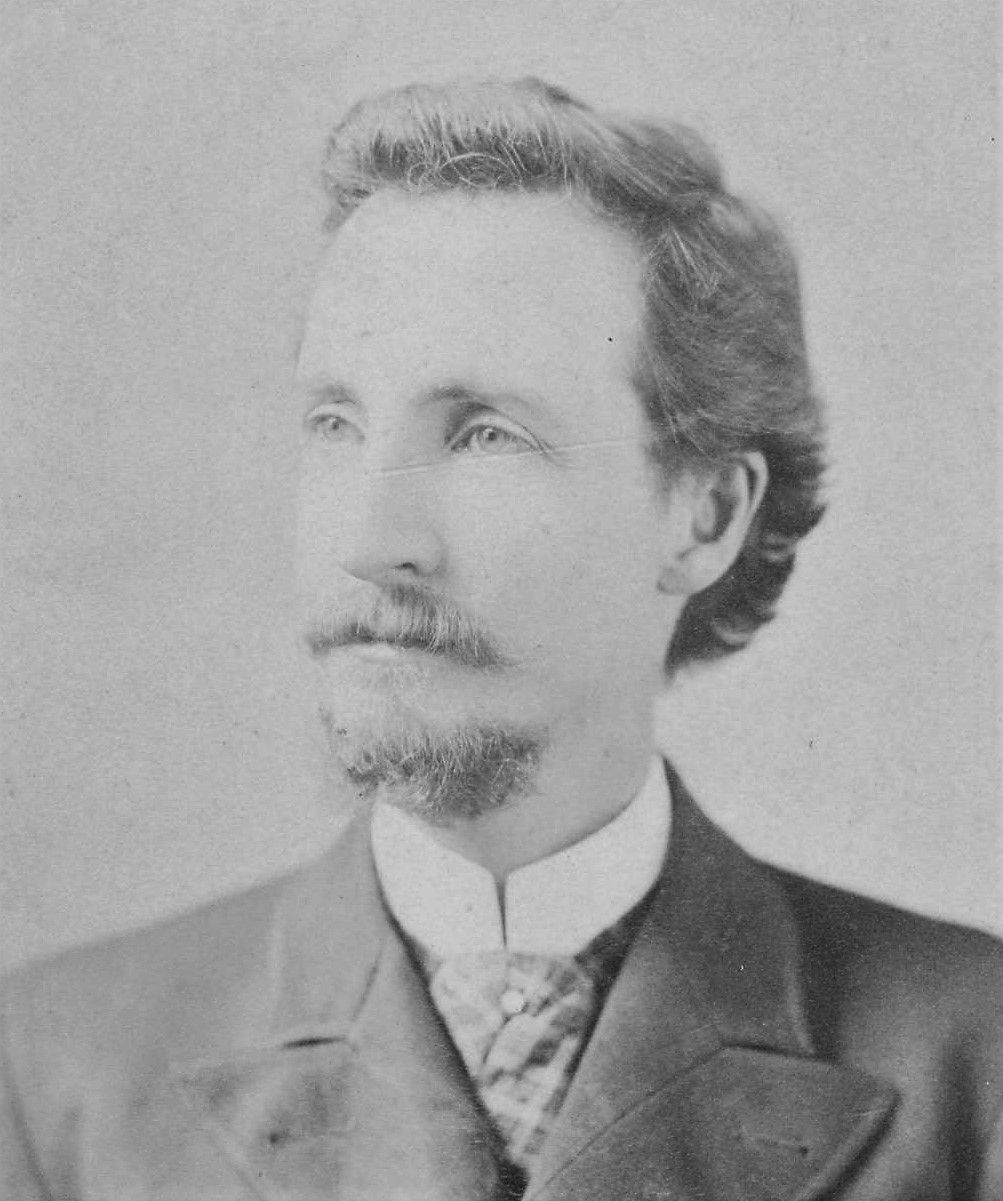 |
| Dr. Morrison Munford (1842-1892) |
On May 12, 1886, W.D. Carlile marched down to the Junction at 9th and Delaware in front of the Kansas City Times office with retribution on his mind.
Hidden in his jacket pocket was a loaded pistol. As he watched Dr. Morrison Munford, editor for the Times, jump on the streetcar with his friend, E.L. Martin (founder of Martin City) at 5:15pm, he was quick to follow in their paths.
Hidden in his jacket pocket was a loaded pistol. As he watched Dr. Morrison Munford, editor for the Times, jump on the streetcar with his friend, E.L. Martin (founder of Martin City) at 5:15pm, he was quick to follow in their paths.
Before Munford could even sit down, Carlile withdrew his revolver and shot into the busy streetcar and struck Munford in his side. As Dr. Munford turned toward Carlile in confusion, Carlile fired a second shot that hit 16-year-old Jennie Streeter in the left breast. Luckily, her corset saved her from any grave injury.
As the passengers on the streetcar screamed and sought shelter, Dr. Munford reached in his own pocket for his Colt revolver. Before he had the opportunity to shoot at his assassin, Carlile jumped from the moving streetcar and fired two more shots. One of them hit John E. Hale, a 50-year-old bookkeeper in the face just below the right eye.
 |
| The Junction at 9th and Main in 1890, the site of the shooting. The Kansas City Times building can be seen |
The Kansas City Times claimed that Carlile was known for this type of mischief, stating “He believes the revolver as a means of settling all differences, no matter how trivial.” The Kansas City Times claimed that all information printed in the story a few weeks earlier was true. They declared the article was to “warn the public against purchasing Crute’s lands” and to “unmask a smiling villain.”
Just a few days later, Carlile’s wife, described as “medium stature and very plump,” entered into the jail and paid his bail. Allegedly, she got the money from none other than Sarah J. Crute.
Miraculously, all of Carlile’s victims survived the shooting, and after paying $100 to the courts and pleading guilty to assault, he was free to go.
He knew he was no longer an upstanding citizen of Kansas City, so he was quickly on the road and ready to wreak havoc elsewhere.
 |
| June 15, 1886 drawing of the attack at the Junction. Courtesy Kansas City Times |
Carlile moved back to Chicago with his wife and two children. . .
with beautiful Sallie J. Crute in tow.
By March 1887, William Carlile had left Chicago and was buying up property in Napa, Ca. Included in this property was a ranch outside of Napa and one of the biggest houses in town known as the Yount mansion purchased for $15,000. It had been built a few years earlier for a whopping $25,000. This home still stands today and is on the National Register of Historic Places.
All of us wine lovers know the importance of Napa Valley. To be clear, the town of Napa was quite small during this time period- a population around 4,000. Kansas City at the same time boasted a population well over 125,000.
If he made the headlines in a metropolis, it wouldn't take long before the same happened in the little town of Napa.
All of us wine lovers know the importance of Napa Valley. To be clear, the town of Napa was quite small during this time period- a population around 4,000. Kansas City at the same time boasted a population well over 125,000.
If he made the headlines in a metropolis, it wouldn't take long before the same happened in the little town of Napa.
Carlile rose within the upper echelon of society – but there were some concerns. Inside the Yount mansion that still stands today were secrets Napa was just starting to unravel. The Napa County Register reported, “In the mansion with him lived a very handsome young woman who was not Mrs. Carlile.”
 |
| The Yount Mansion at 423 Seminary St. was built in 1884 and was the site of the Carlile-Crute saga in 1887-88. The home in Napa was purchased with Sallie Crute's money. The home is now on the National Register. |
First, he told people she was the wife of a friend. Then he told them she was his cousin. Last, he claimed she was his ward.
It appears the counselor couldn’t keep his lies straight.
 |
| A drawing from a photo of Mrs. Mary Carlile Courtesy San Francisco Examiner |
This harmonious arrangement was about to blow up into pieces.
In January 1888, Mrs. Carlile ran away from the mansion in Napa where she and her husband were cohabitating with Ms. Crute. She was taken in by a neighbor and reported that her husband and Miss Crute had been “for a long time intimate” and she had run away because she couldn’t take the abuse any longer.
Her story smelled of scandal, and the newspapers were quick to pick it up. She openly spoke with journalists and told them that she and her husband had no money. They had been living for years off the money of his mistress.
 |
| A drawing from a photo of Sarah J. Crute Courtesy San Francisco Examiner |
Mrs. Mary Carlile claimed they tried to make it work, her husband begging her to try out living with Sallie in the home since her money would help them. Mrs. Carlile stated, “My life was a perfect hell in that house.”
Even though Mr. Carlile was in bed sick, it didn’t stop him from also talking to reporters about their situation.
He insisted that it was his wife’s idea to take in Sallie and use her for money and that his wife had begged him to shoot Dr. Munford in Kansas City for ruining her reputation. He even had the audacity to claim that his wife had told him to divorce her and marry Sallie.
 |
| March 20, 1888 headline in the San Francisco Examiner |
Sallie denied the affair but said his wife owed her $5,000 for the bail and other expenses back in Kansas City. “When Mr. Carlile and I came out [to California] in 1886 it was at the suggestion of Mrs. Carlile,” Sallie told reporters. “The allegations contained in the Kansas City Times touching our relations were absolutely false, and must have been instigated by personal ill-will. There were no grounds for the charges.”
I’m not sure I believe little Sallie J. Crute.
She went on to claim that she and Mrs. Carlile “were the closest of friends.”
Regardless, the headlines had followed the Carliles to Napa- and these headlines would force them to leave.
In February 1888, the tumultuous and confusing love triangle came to a head. Possibly out of retaliation, Sallie filed Mrs. Carlile filed two separate suits- one in Kansas City and one in Napa. She charged her husband with desertion and asked for his financial support. In a suit in Kansas City, she sued Sallie J. Crute for $50,000 in damages, asserting “by means of offers of money, aid, social position and influence, did wickedly, willfully, designedly and maliciously debauch and seduce W.D. Carlile.”
 |
| "A Birdseye View of Napa City"- circa 1880s. Image courtesy University of California-Berkeley |
Twelve days later in San Francisco, William Dorsey Carlile made an honest woman out of Sallie J. Crute and married her.
 |
| Kansas City Times headline April 18, 1888 |
In 1890, W.D. Carlile published a 142-page “Personal Statement” printed and bound in leather. He asked newspapers across the nation to publish its availability so he could give “explanation and vindication of his conduct throughout his troubles in Kansas City and California.”
From my research, I have been unable to locate this “Personal Statement.”
A character such as William Carlile wasn’t about to sneak into the undiscovered pages of history. He did bounce back and forth from the west coast to Chicago, still allowed to practice law in both states. In 1892, he represented the Chicago World’s Fair in a lawsuit. In 1898, he was sentenced to 30 days in jail after he punched a defendant in a Chicago court in the eye.
After the late 1890s, Carlile seems to have been able to erase his errs in the headlines. It may have been because he changed his identity altogether and abandoned his law practice. He changed the spelling of his name to “Carlisle” and began to dabble in apple orchards.
His love for orchards became his priority. Carlisle even invested money into a large apple orchard in his home state of Virginia. The property in Afton, Va. was located in the Blue Ridge Mountains and was famously known as the "Royal Orchard." Lore stated that the apples from this property were sent to the Queen of England, hence its name.
 |
| Royal Orchard's "Scott Castle" built in 1911 on the land once owned by Carlile |
Luckily, Virginia seemed to remain safe of scandals associated with the Carlile/Carlyle/Carlises. They sold the property to Fred Scott in 1902, and the property today still remains with this family. The built a large stone castle in 1911 on the land that is known as Royal Orchard's "Scott Castle."
Always one to weasel people into investing in his ideas, W.D. Carlisle became a sought-after speaker at fruit conferences across the nation. Called “professor” by his newfound industry, William and Sallie Carlisle made their home by 1904 in Spokane, Washington where he had convinced wealthy men to invest in 600 acres of land ten miles southeast of the city. The plan was to manufacture cider, champagne and apple butter under the name of the Evergreen Fruit Company. "Professor" William D. Carlisle was given the title of superintendent of the factory and the newspapers stated, "He understands the making of cider, wines and fruit butters and has labored in the industry both in America and in Europe."
Considering his health, I'm pretty sure the European connection was a bit of a fib. And, his "experience" in the industry spanned a whopping ten years- tops.
Regardless, the newspapers and horticulture industry touted Professor Carlisle as a “widely known champagne manufacturer.” His ability to turn apple juice into champagne became a brief sensation. The Evergreen Fruit Company boasted that "the apple cider, after Mr. Carlisle's treatment, could hardly be discerned from light French wines."
Yellow journalism, perhaps?
 |
| An apple orchard in Washington. Photo courtesy 1889 Magazine |
Considering his health, I'm pretty sure the European connection was a bit of a fib. And, his "experience" in the industry spanned a whopping ten years- tops.
Regardless, the newspapers and horticulture industry touted Professor Carlisle as a “widely known champagne manufacturer.” His ability to turn apple juice into champagne became a brief sensation. The Evergreen Fruit Company boasted that "the apple cider, after Mr. Carlisle's treatment, could hardly be discerned from light French wines."
Yellow journalism, perhaps?
On Jan. 17, 1905, Professor W.D. Carlisle stood to address a crowd from the Northwest Fruit Growers’ Association at the Boise YMCA and “dropped dead on the platform.” His death came only months before his large apple orchard manufacturing plant, the Evergreen Fruit Company in Spokane was set to open its doors, and it was said that “some valuable secret formulas [for apple champagne] perished with him.”
 |
| Spokane in 1910. Image courtesy Spokane Historical, Eastern Washington University |
In his obituary, there is no mention of his children.
Sallie J. Crute, now Mrs. Carlisle, stayed in Spokane. In 1910, it is clear her wealth had diminished as she is a roomer with others and working as a clerk in a physician’s office. She later remarried, but her fate is unknown. She never had her own children and lost the bulk of her money. Was it for love? Was it because she was duped?
William J. Carlile’s first wife also opted to distance herself from her past. After moving to Chicago with her two children, she also changed the spelling of her last name, opting for “Carlyle.” She died in 1912 and is buried in Chicago.
Newspapers in the 1880s called the Carlile story “one of the most remarkable scandals ever made public.” There is no mistaking the intrigue even well over a century later. Just as many questions today remain as to what led to such a scandal and as to who the true victims
were.
 ** My newest project is my FREE podcast with 610 Radio host Bob Fescoe called "Kansas City: 2 States, 1 Story" where we discuss our city's history in a fun, relatable way. Download the episodes and listen at your convenience. Just click "download" and PLAY! To access the podcasts, CLICK HERE!
* If you loved this story, consider "liking" The New Santa Fe Trailer on Facebook so you don't miss any of my writing! Click here!
*Colorization of the main image by Jamie Russell. She does amazing lettering and art! Check out her Facebook page HERE!
were.
* This story was originally published in the Martin City Telegraph and was expanded for this blog.
|
* * * *
 ** My newest project is my FREE podcast with 610 Radio host Bob Fescoe called "Kansas City: 2 States, 1 Story" where we discuss our city's history in a fun, relatable way. Download the episodes and listen at your convenience. Just click "download" and PLAY! To access the podcasts, CLICK HERE!
* If you loved this story, consider "liking" The New Santa Fe Trailer on Facebook so you don't miss any of my writing! Click here!
*Colorization of the main image by Jamie Russell. She does amazing lettering and art! Check out her Facebook page HERE!


