The celebration of the New Year 1865 had gone well into the
night in the palatial home just shy of four miles from Kansas City. Exhaustion from the evening before had the Johnson family eager for welcome slumber.
Nineteen-year-old William had returned from college to spend
the holidays with the family. Fifteen-year-old Cora and eleven- year-old Edna
had greatly enjoyed visiting with him and playing games well into the evening
before. Their father had forgiven William for his surprise enlistment years
before in the Confederate Home Guard under Upton Hays; having two sons fighting
on opposing sides was too much for Thomas to even fathom.
As the two girls headed to bed under the warmth of their
sheets and William retired to his room, Thomas had business to attend to. As a
corporal to the guard assigned to organizing local men to protect the area from
guerrillas, Thomas had fought off sleep in order to give his final orders to a
group of men near midnight. Mr. Patterson, his farm manager, had retired
earlier.
That left his beloved wife, 54-year-old Sarah restlessly waiting
for him to finish his orders so they could turn in. She yawned in a daze as she
turned a page in her Bible. The fires had been extinguished and the house was
dark except for the lantern that sat between them in the parlor.
 |
| Battle of Westport- Courtesy of Civil War Trust |
Although Thomas was exhausted, his mind continued to shuffle
through the days’ activities. Just as sleep was about to enrapture them both
and they were thinking of going upstairs to bed, the faint sound of the hooves
of horses stirred him wide awake. As the noise grew closer and closer to his
600-acre farm, his heartbeat quickened and he stiffly sat up in his chair. His
motions stirred Sarah from the passages of her beloved book.
“What is it?” she questioned as she touched his arm in
concern.
Before Thomas could answer, Sarah heard the horses and the
faint voices of men. She turned to her husband, a woman’s intuition taking over
her actions. She gripped his forearm a little tighter as her eyes widened.
Thomas, not one to shy away from a small sense of danger, placed his hand on
top of hers. “No worries. It may be the men returning with some type of news.”
As a Southern Methodist minister, Rev. Thomas Johnson was
used to late-night visits and had always held a high regard for hospitality to
his neighbors. He stood up, his joints stiff. He wrapped his coat around his
large frame a bit tighter, the draft from the wind escaping through the cracks
of the tightly-shut windows. The men outside on this cold winter night hollered
for the reverend.
 |
Sarah Davis Johnson
(1810-1873) |
He crept toward the locked front door and turned the large
key. Thomas cracked it open just a few inches to explore what these men could
possibly need in the dead of night. Sarah, growing more and more concerned with
each step, followed her husband as she straightened her nightcap.
It was one of those bright, moonlit nights. The snow on the
ground aided in making everything visible even this late. A group of men,
possibly as many as nineteen, huddled together mounted on their horses as they
stood in the shadows just outside the gate. Each man watched closely as Rev.
Johnson cautiously enquired through the partially ajar door to what they could
need.
“We’re lookin’ for the way to Westport,” one man responded,
his breath blowing fog into the crisp air.
Before Thomas could respond, another man hollered, “Or the
way to Kansas City.”
Thomas’ brow furrowed in confusion; he pulled his head back
and turned toward Sarah. She violently shook her head back and forth.
Regardless of her concerns, Thomas quickly rattled off general directions to
both towns.
Dissatisfied with their progress, the men muttered to each
other. The first man that spoke when the door was opened asked, “How about a
drink of water before we leave?”
Thomas complied as he reached his hand forward and pointed.
“Just over there you’ll find our well. The dipper is hangin’ next to it. Help
yourselves an’ be on your way.”
The response that followed had Sarah clinging to her
husband’s waist. Instead of guiding their horses toward the well, the men
began to dismount. As one man opened the gate and the others quickly followed
him, she pulled at Thomas’ robe.
“Close the door, Thomas!” she shrieked in a whispered panic.
The reverend moved away and began to turn the knob.
But it was too late.*
*******************************
Rev. Thomas Johnson, pioneer missionary of the Shawnee
Indian Mission and namesake of Johnson Co., Ks., has one of the most colorful
and controversial histories of any man of the area. Piecing together his
motivations and his loyalty leaves us to wonder where the truth lies amidst the
incredibly differing accounts of one individual.
Rev. Johnson was a man of God. But he was a slave owner. He
worked with the Native American tribes and formed a school. But many believe he
stole land and financial gain from them. He served on the Bogus Legislature
that wished to admit Kansas as a slave state. But he later was labeled a
staunch supporter of the Union.
 |
| Rev. Thomas Johnson |
He was, in fact, a man who fell on both sides of some of the
most scandalous “bruises” of the history of the United States. Between the
mistreatment of Native Americans and the institution of slavery, Rev. Thomas
Johnson was involved in all aspects of the inflamed culture of a country soon
divided.
To investigate the life of Rev. Thomas Johnson means you
will have to decipher from two very contrasting viewpoints.
John C. McCoy, son of Baptist Rev. Issac McCoy, wrote in the
Journal of Commerce in 1880,
“[Johnson] was open and liberal toward every enterprise looking to the moral,
educational and material advancement and growth of the country.”
In the Springfield
Republican in 1854, one man reported, “One of the most determined, bitter
and unprincipled enemies to freedom in Kansas is the Rev. Thomas Johnson . . .
Once so poor he had not money to get to the territory decently, now worth more
than sixty thousand dollars, acquired upon the field labors of love. . .
[Johnson] is a slaveholder- a trafficker of human flesh- buys and sells men,
women and children. . . He held slaves in violation of the Missouri Compromise,
thus showing he regards neither the laws of God nor the laws of man.”
Fasten your seatbelts! This is a ride.
Born July 11, 1802 in Nelson Co., Virginia, Thomas Johnson
was the son of Revolutionary War vet Clabourn Johnson and his wife, Elizabeth
“Betsy” Simms. From humble means, he came to Howard Co., Mo. with his family in
1822.
Thomas and his younger brother, William (b. 1805) were drawn
to the Methodist ministry. A part of the
class of 1826, Rev. Thomas Johnson’s first assignment was at Mount Prairie in
Arkansas.
 |
| Rev. Johnson's Bible is on display at Shawnee Indian Mission |
On September 7, 1830, Thomas married 20 year-old Sarah
Tuttle Davis, the Kentucky-born daughter of Thomas and Sarah Ruddel. According
to "The Davis Family of Kentucky," her parents, well before marrying,
were captured by the Native Americans led by Tecumseh (a Shawnee chief) in
1780. They were later released back to their families.
Also in 1830, Chief Fish of the Shawnee appointed Rev.
Thomas Johnson to establish a mission school in Kansas Territory. His brother,
William was appointed to the Kanza tribe (Kaw).
Her mother, once a captive of the Shawnee, would later come
and live with her daughter and son-in-law at the Shawnee Indian Mission. It was
said Thomas Johnson’s mother-in-law “knew the Shawnee language as well as her
own.”
Rev. Nathan Scarritt (1820-1890), once a resident of the
Mission, wrote, “The fact that Mr. Johnson was the first one selected to go as
a missionary to the then-powerful tribe of the Shawnees, is indicative of the
high standing he occupied in the eyes of his church.”
 |
| "The Prophet," Tecumseh's brother (1775-1836) |
Standing six feet tall and well over 250 pounds, Johnson
gathered his few possessions and his bride for the trip from eastern Missouri
to just west of the edge of America. She rode a horse while he walked beside
her the entire way across the state. They crossed into Kansas Territory in late
1830 and settled in a wooded area near the present town of Turner in Wyandotte
County. A one-room log cabin was built with a small cabin next to it where he
planned to begin his missionary work among the Shawnees. He chose this location
due to its proximity to the Chouteau Trading Post.
In a treaty in 1825, the Shawnee were given land bordering
Missouri on the east, up to the Kansas River to the north, stretching to Topeka
and as far south as the southern border of Johnson County. The 1.6 million
acres of land was first settled by a band of the Shawnee tribe that had been
pushed earlier to land near Cape Girardeau, Mo. Around 1830-1831, the Fish band
of the Shawnees from Ohio, numbering about 900, moved west to the land
designated to them. With this band came “the Prophet,” Tecumseh’s brother.
I sure wonder what Rev. Johnson’s mother-in-law thought of
this development.
The first proclaimed white child to be born in Kansas
Territory was Alexander Johnson, born in 1832. An earlier child, also named
Alexander, had been born and died in 1831.
As early as 1832, Thomas Johnson, a man of the cloth, was
the first to bring slavery into Kansas. The Shawnees were unfamiliar with this
institution, but as further “indoctrination” occurred, some of the wealthier
members of the Shawnee tribe followed in Johnson’s footsteps and owned slaves
in Kansas Territory as well.
In addition to hopes of converting Native Americans to
Christianity, the United States government hoped to use acculturation to mold
the natives into something, frankly, not natural to their beliefs. Part of this
was to teach Native Americans agricultural practices. Because these tribes,
including the Shawnee, were sharing land with so many other tribes, their
natural survival method of hunting wasn’t easy.
That means adaptation to farming was essential to survival.
In 1838, Thomas Johnson opted to move his little mission
south to a more convenient location for his endeavors. By the following year,
he was appointed as superintendent Indian Mission District and to the Shawnee
Indian Mission.
The government took a deeper look at the missionary work in
Kansas Territory. They granted just over 2,000 acres of land for the Methodist
church to further establish the mission. The government promised a fund for the
Delaware Indians for $4,000 a year for ten years and a fund of $1,500 a year
for the Shawnee. In turn, Johnson welcomed all Native Americans to his new location.
The Methodist church also supported the erection of the new Shawnee Mission
with about $20,000 over the years.
In “Before Bleeding Kansas” published in Kansas History, Kevin Abing writes,
“Although good intentions may have motivated Johnson, other less lofty
incentives certainly influenced his thinking. He was an aggressive entrepreneur
who capitalized on any opportunity to enhance his own wealth.”
Rev. Johnson had an idea- he didn’t just want to teach the
word of God or educate the children. In 1838, he got approval from the
government to start a Manual Labor School.
This vision of Johnson’s turned into a model of the government’s goal of
civilizing Native Americans.
 |
The West Building in 1927
Courtesy of Kansas State Historical Society |
The location chosen was certainly no mistake. Just three
miles from pro-slavery Westport, Mo., the new mission was convenient to
supplies and support in more ways than one. The new Shawnee Indian Mission was
sheltered in a small valley off the Santa Fe Trail. This is where
many-a-family, a new generation of explorers, traveled by wagon train into
Western expansion. Slow oxen trains, loaded up and bound for unknown crevasses
of open countryside, passed by the doors of the Shawnee Indian Mission.
Rev. Johnson brought in lumber from Cincinnati and some of
the earliest bricks came from St. Louis. He later built a kiln and fired his
own brick to build the structures on-site. The west building, completed in
1839, was used as teacher’s quarters and for classrooms.
In late October 1839, the boarding school was opened. He
enclosed 400 acres of the 2,000 granted by the government. He planted twelve
acres of apple trees, thus creating the first apple orchard in Kansas. It is
said that when he traveled on horseback, he would sprinkle Kentucky bluegrass
seeds, then introducing a new grass variety now commonly seen.
 |
East building at Shawnee Indian Mission today
Courtesy of City of Fairway |
By 1840-1841, the east building was completed and used for
classrooms, housed a chapel, and had a dorm for boys on the upper floor. 16
additional buildings were erected throughout the grounds. A tool shop,
blacksmith shop, sawmill, gristmill, a brickyard and numerous trade shops
dotted the landscape of the Shawnee Indian Mission. This was the first time
that trades were accompanied with worship. Indian boys between the ages of five
and 22 were taught numerous trades; girls were taught to spin, weave, cook, sew
and keep house so “they became good housewives.”
Naturally, the profits of the manual labor of the Shawnee
Indian Mission pupils may have fallen directly into the Reverend’s pockets as
goods were sold to travelers on the Santa Fe Trail. In “Before Bleeding
Kansas,” Abing points out, “Many suspected that Johnson established the Shawnee
Manual Labor School to enrich himself and his Methodist brethren.”
 |
| Shawnee Indian Mission girls' school |
According to the Kansas Historical Society, the operations
of the Manual Labor School centered around routine. Pupils would wake up at 5
a.m. and complete light work until 7 a.m. They would then have breakfast. At 9
a.m., the school bell would ring and they would complete their studies . After
a short recess, they would dine from noon until 1 p.m.. From 1 to 4 p.m., they
would resume their studies. They would take tea at 6 p.m. and would complete
homework until 8. After some “indoor recreation” for 30 minutes, the students
were sent to their dorms.
Can you imagine if we introduced these hours to the kids of
today?
Tuition per year was $75 per year per child. In 1839-1840,
72 students were enrolled at the Mission’s Manual Labor School. Four teachers
were employed.
Later, enrollment soared to a many as 100; at some points,
close to 200 children were enrolled.
In 1843, ill health chased Rev. Thomas Johnson and his
growing family off to the north. The Shawnee Indian Mission was then run by
Jerome Berryman. The Johnson’s first went to Cincinnati for about a year so the
reverend could be under the care of physicians. By 1845, he had built a
farmhouse in Fayette, Howard Co., Mo.
 |
The North Building, Shawnee Indian Mission
Shawnee Indian Mission Foundation |
In 1845, a final large brick building was added to the
property on the north side of the road under the guidance of Rev. Berryman.
This completed a triangle configuration of structures that solidified Johnson’s
place as a powerful early settler of Kansas Territory. At this same time, the
issue of slavery split the Methodist church in two. Thomas Johnson, a proponent
of slavery, sided naturally with the Methodist Church-South and at the time
owned four to six slaves.
In Howard Co., Rev. Johnson met an ambitious and educated
minister by the name of Nathan Scarritt- a name synonymous with the growth of
Kansas City. Scarritt was then working as the principal of the boys’ department
at Howard High School. In 1847, Rev. Johnson convinced Scarritt to leave this
career and in order to take charge of “his complicated academy.”
 |
| Rev. Nathan Scarritt (1821-1890) |
Pupils that had been at Johnson’s Manual Labor School for an
extended period of time were anxious and ready for an advanced education. The
addition of Rev. Nathan Scarritt was a success. He was a missionary at Shawnee
Indian Mission from 1848 until 1851.
Rev. Johnson was able to return to his beloved Indian Manual
Labor School in 1847.
The fiery heat of the nation was about to burn what some
would consider “peaceful relations” of the Kansas Territory. In the 1840s, the
Methodist Mission and the bands of Native Americans got along with no issue. But
reports from other missionaries in the area- against the institution of
slavery- would disagree with this probability of peace at the Shawnee Indian
Mission. According to Kevin Abing in “Before Bleeding Kansas,” an employee of
the Mission punished a black man for a small offense. In turn, the slave became
irate and pulled a knife on the employee. A fight ensued and the slave lost the
knife. The employee then beat the slave with a club but stopped when he figured
he had learned his lesson.
Another account, never verified, stated that Johnson
fathered a child with one of the girl slaves, but she and the child were sold
before she gave birth.
In total, Rev. Johnson and his wife, Sarah had 13 children.
Only six survived into adulthood. His second oldest daughter, Eliza (1836-1865), married John B. Wornall.
Yes, as in Wornall Road and Wornall House.
 |
| Slave record for Rev. Johnson's purchase of a 15 year-old girl in 1856 |
In Martyrdom in
Missouri, published in 1870, author William M. Leftwich wrote, “Mr. Johnson
was never considered a brilliant preacher, but a sound, clear, forcible and
able expounder of the gospel.”
He was also an expounder of slavery in Kansas Territory.
Western Expansion was the enemy of the Native American
tribes, and it became clear that the only way to move forward would be to
section off pieces of land to the individual tribe members. Rev. Thomas Johnson
was a proponent of this movement. If they sectioned off the land of the
Shawnee, for example, the individual tribe members could opt to sell. And who
was interested in buying these rich lands?
Whites, of course.
As Abing explains, “[Johnson] was an aggressive entrepreneur
who capitalized on any opportunity to enhance his own wealth.”
It is no surprise that Rev. Thomas Johnson was at the center
of the reorganization of the future of Kansas Territory.
In William Walker’s journal from October 21, 1853,
concerning who would serve as delegate to Congress, he wrote, “I suppose we may
safely set down Thomas Johnson’s election for delegate as certain. . .[He] had
the whole power of the federal government, the presence and active support of
the Commissioner of Indian Affairs, the military, the Indian agent,
missionaries, Indian traders, etc., a combination that is irresistible.”
In order to admit Kansas as the newest organized state, the
government repealed the Missouri Compromise of 1820 in order to open up white
settlement in the Kansas-Nebraska Act. Because popular sovereignty to hold the key of the future of Kansas Territory as free or slave, the “decision” would reside with the voters. They were left to
elect delegates who would then decide the fate of the land just to the west of
Missouri.
 |
The first atlas of Johnson County, Kansas Territory was in 1854. This image is from the pages of the atlas
and shows the location of the Shawnee Indian Mission.
Kansas State Historical Society |
Rev. Johnson aided the efforts by extinguishing the Shawnee
title to the Shawnee Indian Mission. The Shawnees gave up 1.4 million acres of
land, leaving them with 200,000 acres on the eastern edge. He persuaded the
chiefs to accept $10,000 over ten years for educating the Shawnee children. The
Methodist church, in return, got 2,000 acres of land that Johnson eventually
acquired.
Johnson didn’t stop there; he then gained control of the
Shawnee School Fund where the Methodists were to be paid $6,000 a year for
educating and boarding up to 70 children.
 |
First territorial governor
Andrew Reeder (1807-1864) |
Surveying the land for sale and division in the county named
after him came next. But the underlying issue for settlement and peace resided
within the institution of slavery. The Shawnees felt they couldn’t trust Rev.
Johnson to do what was best for them. And due to the viewpoint of Johnson as
greedy and a slave owner in Kansas, the Northerners who were about to storm the
territory despised him.
Northern papers reported that Johnson had one slave that
netted him $1,000 a year and had a few slaves at the Shawnee Indian Mission.
Other slaves owned by him were leased out. In the Springfield Republican, it was stated that he bought a family of
slaves and promised they could work for their freedom. Johnson then worked them
and sold them before they could do so.
To no surprise of the speculators intently watching the
goings-on in Kansas, Rev. Thomas Johnson was elected to the Kansas Territorial
Council on the pro-slavery ticket and elected president of the council in March
1855. Missourians had flooded over the border and illegally voted throughout
the territory to ensure that those elected were on their side.
In the “Old Shawnee Mission” published by the Kansas
Historical Society, writer Edith Connelly Ross declared that Johnson, in regard
to being elected as president of the council, “was not permitted to decline.
His anxious, futile attempts at promoting peace were ignored.”
Promoting piece under a pro-slavery stance?
The tides were turning toward the spread of slavery to the
west under what was labeled the “Bogus Legislature” due to the hollers from
Northerners to recall the election because of these injustices.
Andrew Reeder, the first territorial governor of Kansas
Territory, was appointed by the President. Gov. Reeder called for the
legislature to meet first in Pawnee near Fort Riley far away from the influence
of the pro-slavery Missourians. But the men that made up the legislature only
took four days to oust the antislavery men and vote to move the legislature to
a more convenient location.
They chose a place ½ mile from the Missouri border and three
miles from pro-slavery Westport, Mo.
 |
Free state activist Charles Robinson speaking at Lecompton, 1856
Civil War on the Western Border |
The Shawnee Indian Mission became the headquarters of the
Bogus Legislature in 1855 under the suggestion of Rev. Johnson. Gov. Reeder set
up his offices there until he received word that he had been fired from his
position in April. A group, including Johnson, had signed a petition charging
him with speculation and disloyalty. The legislature then moved to Lecompton,
Ks.
In the Conquest of
Kansas by Missouri and Her Allies, published in 1856, author William
Phillips describes Rev. Johnson as a vulgar man, illiterate, and course with
bad grammar. “A violent pro-slavery partisan, he has been useful tool in his
way. His name may be found figuring in some of the most violent of the
pro-slavery partisan meetings, and he was president of the council of the Bogus
Legislature which, within the walls of his mission, in the rooms dedicated to
the service of Him who is the God of justice and truth, perpetrated one of the
most flagrant outrages on right and justice recorded on the page of history.”
Yes, he was a man of complicated intentions.
A man who switched loyalties in the middle of Bleeding
Kansas and the Border Wars.
His daughter, Edna Johnson Anderson proclaimed, “During the
Border Warfare, he was always considered a Southern man and all the Missourians
were welcomed at all times at his home, while he had always been conservative
and considered a loyal citizen. . . He would have gone with the South had the
state gone, but he [..] was a firm believer in the Union.”
 |
Rev. Thomas Johnson's recliner is on display
at the Shawnee Indian Mission Museum |
The heat of the tensions of the Border Warfare and a call
upon retirement had Rev. Johnson opting to leave the Shawnee Indian Mission in
the charge of his oldest son, Alexander in 1858. Earlier in 1855, he had
purchased a sprawling farm of 600 acres from James Davenport.
According to a 1911 article in the Kansas City Star, the Southern style brick home had been built in
1852 by James Davenport’s slave, Sanders Davenport. The house stood at what
would become 2937 E. 35th St. and was just under four miles from
Kansas City and just under three from Westport.
Rev. Thomas Johnson did, in fact, sign an oath of loyalty to
the Union. His support was a slap in the face to his Missouri pro-slavery
friends. His son, Alexander Johnson served as a Lieutenant Colonel in the
Kansas State Militia and participated in the Battle of Westport. Another son,
William, had joined Upton Hays’ Missouri State Guard on the Confederate side,
but the reverend allegedly arranged for his son to be released from duty.
It appears his sons were just as confused as to where true
loyalty lay.
After Order No. 11 forced evacuation of the citizens of
Jackson, Cass, Bates and part of Vernon counties in 1863, thousands of people,
predominately women and children, were driven from their homes. His daughter,
Edna stated that sometimes 15-20 families at a time stayed with the Johnson’s
on the Davenport farm.
 |
| Gen. Order No. 11 by George Caleb Bingham |
Those that remained in the district had to sign an “Oath of
Loyalty.” Since Rev. Johnson was appointed as corporal to the guard to look out
for Union patrolmen in the area, he was sometimes called upon to sign these
loyalty oaths as a witness.
At one point, a lady came to their home. Edna recalled, “She
was known as one of the warmest sympathizers of the South, and one whose home
the guerrillas frequently made their headquarters.”
Johnson refused to sign her oath of loyalty when asked.
Edna wrote, “My mother and family have always considered
that this was the principal grudge the guerrillas had against my father.”
Is that what led to the events on that cold, wintery night
on January 2, 1865?
***********
Rev. Thomas Johnson tried to slam the door shut, but it was
too late. The men outside had charged past the gate and shot through the heavy
oak door, a bullet puncturing the reverend in the stomach. As his legs gave
way, Thomas was caught by his wife and she eased him to the floor.
The volley of gunfire stirred the rest of the home wide
awake. Thomas’ son, William and Mr. Patterson, the farm manager, raced down the
stairs and toward the slumped remains of Rev. Johnson. Sarah held his head upon
her lap as bullets continued to fire from just outside. “Get him a lounge to
lay on!” she screamed to the two men.
It was too late. The Rev. Thomas Johnson, just 64 years old,
was gone.
Screams followed from fifteen-year-old Cora who had awoken
in the chaos. “They’re settin’ fire to the house!”
 |
Rev. Thomas Johnson's headstone at Shawnee
Methodist Mission Cemetery |
There on the back porch, the flames and smoke grew. Sarah
Johnson, not one to surrender, raced to the kitchen and grabbed two buckets of
water. She pushed open the back door and threw the water on the flames. One of
the men in the group of murderers stood nearby and, shockingly, did not stop
her from her efforts.
Satisfied the flames were extinguished, Sarah flew back
inside, snatching up guns and ammunition on her way up the back stairway. The
men had already surrounded the stately brick home and started to shoot at her
as she climbed her way up.
According to Edna, the next morning, her mother found where
shots had passed through her large skirt.
Hunkered upstairs in the dark, William and Mr. Patterson
began to fire at the men below. Blood stained the bright white snow,
evidence that some of their efforts of retaliation had been successful. The
murderers tried one more time to set fire to the home but were unsuccessful.
About 4 a.m., hours and hours after the fatal shot ended the
life of one man, the murderers gave up their efforts “feeling they had had
accomplished their chief purpose.”
The next morning, the papers reported of the loss.
The Journal of
Commerce wrote, “It becomes our painful duty to chronicle another of those
terrible murders of which our borders have so long been ravaged. The Rev.
Thomas Johnson, one of the most widely known citizens of Western Missouri, was
killed by bushwhackers in his own house about 2 ½ miles from Westport.” It was
stated that those responsible were a band of guerrillas spending the winter near Hickman’s Mill.
They didn’t take any time establishing the culprits,
although many argue the identity of the killers. Just like so many other parts
of Johnson’s life, his death was just as confusing as his questionable loyalty.
 |
The Davenport Home, the location where Thomas Johnson was murdered.
Missouri Valley Special Collections |
In Martyrdom in Missouri (1870), the author states, “Many believed it was because of his strong Union sentiments and the
bushwhackers were the murderers, while just as many believe that it was because
he was a Southern Methodist preacher, that the Jayhawkers were his murderers.”
Another theory is that the murder was a robbery, yet it was
reported that Thomas Johnson still held $1,000 in his pocket as he lay on the
floor dead.
Rev. Thomas Johnson was laid to rest at the Shawnee Indian
Mission cemetery (5341 Canterbury Rd., Fairway, Ks.). His wife never returned
to the Davenport home where her husband had met his murderous end. She moved
back into the Methodist Mission which was officially abandoned as a mission in
1862 and temporarily taken over by Union soldiers.
The house where Johnson lost his life stood for many years
to come. Even in 1912, a bullet hole through the front door and a lead ball
lodged in the casement remained at the old Davenport home as telling evidence
of the bloodshed it once witnessed.
 |
Later image of the Shawnee Mission, converted to a business
Shawnee Indian Mission Foundation |
The house was torn to the ground December 1, 1916.
As for the Mission, the ownership was transferred after Rev. Johnson’s death to Rev.
Thomas Johnson. His family owned it for a time before it was eventually sold to
other owners. It should come to no surprise that this development made many
scratch their heads even then.
Even in the 1980s, the Shawnee tribe sued for control of the
Shawnee Indian Mission.
Their efforts failed.
In 1927, the state of Kansas was able to purchase 12 acres
of the original land where, although in desperate need of repair, the three
original brick structures still stood.
************
Today, the legacy of the Shawnee Indian Mission miraculously
survives due to a little bit of luck and a lot of preservation efforts. Three
separate entities work closely together in order to preserve the oldest buildings
standing in the state of Kansas. The state owns it, the Shawnee Indian Mission
Foundation helps sustain it, and the City of Fairway runs day-to-day
operations.
 |
The West Building in 1928
Courtesy of Shawnee Indian Mission Foundation |
Visiting the mission is a must. Nestled amidst current-day
Fairway between golf courses, subdivisions and schools, the Shawnee Indian
Mission is a time capsule. The east building houses the museum where you can
see Thomas Johnson’s Bible, the old school bell and a cane carved by Shawnee
leader Charles Bluejacket. Exhibits in this cir. 1840 building include the
story of settlement in Kansas and the Johnson family, Bleeding Kansas, the
trail system and the Civil War.
Site director Jennifer Laughlin is a vital piece to the
future of the Shawnee Indian Mission. Her positivity and genuine love of the
mission is felt the minute you walk through the door. In her position, she
hopes to grow additional annual events like the egg hunt and the fall festival,
partner with local tribal members to present more Native American history, and
grow a volunteer docent program in order to reach more students and visitors (To see what events are offered, go to
Shawnee Indian Mission's Facebook page!).
The north building, built in 1845, is a short walk away and
offers exhibits on the Native American tribes that once roamed the land here.
In addition, a fully functional research library offers visitors a chance to
read up on various subjects well beyond the Johnson family and the mission
itself. The library is available by appointment.
Efforts are underway to preserve and rehabilitate the oldest
of the three buildings, the west building. Today, visitors can stroll nearby on
the walking trail that winds through the 12 acres of beautifully landscaped
parkland.
 |
| The West Building today |
Jennifer commented, "Far too often, people drive
through the site, not realizing what they just passed through.
History is so important to understand today
and bringing in young families and children will help the site to grow and
become a vital and memorable part of their local involvement."
We may not understand or even comprehend the complicated
life of Rev. Thomas Johnson, but he remains the namesake of the most populated
county in the state of Kansas.
Rev. Johnson is forever linked to some of the most controversial
issues of American history. We can’t erase these from record; our living
history exhibits need to be showcased as a vivid reminder of what once was a brutal struggle along the border. The survival of the Shawnee Indian Mission is
imperative so that we can literally walk in the steps of those before us and
reflect on the triumphs and blunders that built our area into what it is today.
* The story of Thomas Johnson's murder was taken from several accounts, but poetic license was used to enhance the story. :)
If you liked this piece, please search Facebook for "New Santa Fe Trailer" and like my page so you don't miss any of my writing!
Main image drawn in 1857 by Henry Howe and courtesy of the University of Kansas


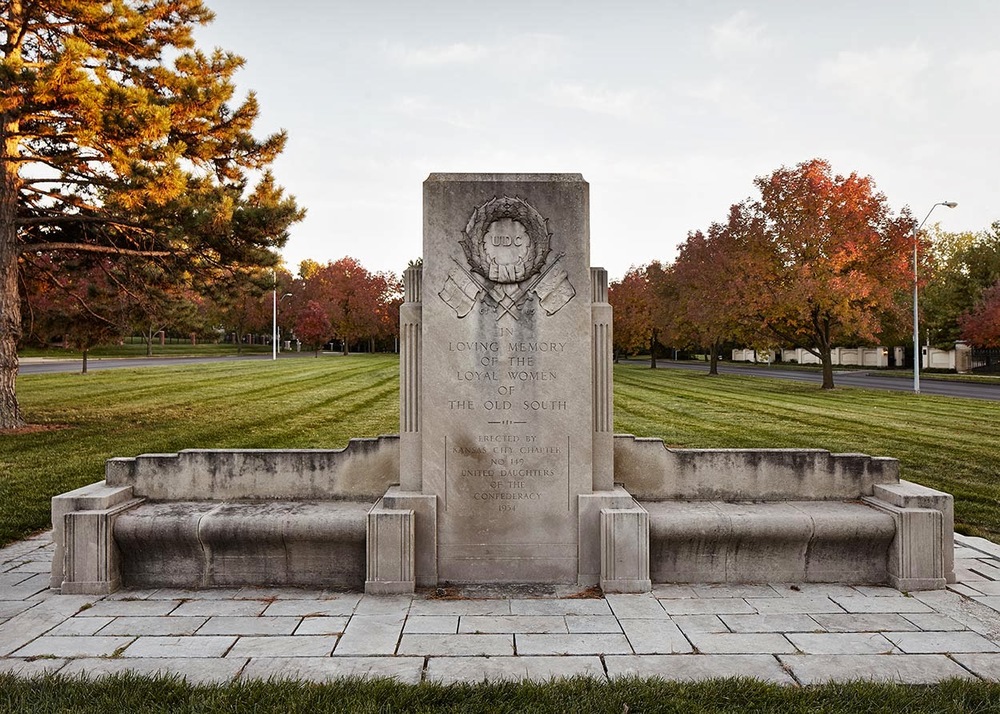
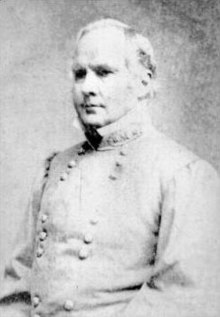


 Dr. Neely believes that monuments are a part of our history. “Situated in highly public places, such as parks and cemeteries, monuments weren't just history, a remembering of what had happened in a particular place, but a conscious celebration of one person, event, or part of the past that civic leaders decided were worthy of honor.”


